
"coffee root"
4000 article(s) found

German history: substitute coffee
The "alternative coffee" that has been popular in history, as well as dandelion root, grape seed, lily root, barley flour and so on, is hard for people living in peaceful and affluent areas to imagine.

How do you plant coffee trees? Its growth process, what are the growth conditions?
Professional coffee knowledge exchange more coffee bean information please follow the coffee workshop (Wechat official account cafe_style) how to grow coffee trees? Its growth process, what are the growth conditions? 1. Nursery preparation: attention should be paid to shading effect in nursery selection. Seedlings exposed to direct sunlight are easy to die and reduce the survival rate. Therefore, the nursery must have shading equipment, shading materials can

Do you really know coffee? How are coffee trees grown?
Pay close attention to the coffee comment (Weixin Official Accounts vdailycom ) and find a beautiful coffee shop to open one's own shop. 1. The excavation quality of planting ditch affects the soil and water conservation of coffee garden, the implementation of agricultural technical measures, the growth and yield of coffee tree, which should be seriously implemented. Excavation method, gentle slope can be excavated from the slope to the slope, and steep slope should be excavated from the slope to the slope.

Coffee exists in the Italian diet. Coffee culture is deeply rooted in the hearts of the people.
Stew the peeled salami, a traditional Italian sausage, in double Espresso before dripping cologne, and on the advice of several futuristic chefs, including Jarro M aincave, cancel the traditional mixed coffee to experiment with the new blend. These two recipes and recipes for coffee come from an article called futuristic Food.

Planting knowledge of Coffee trees guided by cultivation techniques of small Coffee
Small-grain coffee is a shrub of Rubiaceae, which is suitable for planting in areas with an annual average temperature of 19 ℃ ~ 21 ℃ and an altitude of 800-1400m. It has the advantages of fast plant growth, early fruit and high yield. The land preparation should choose the contour platform with deep soil layer, loose and fertile soil, clean wind, sufficient light and shade trees, annual rainfall of 700 to 1600 mm, slope of less than 30 degrees, and row spacing of 2 to 3 meters.

Cultivation techniques of small Coffee guiding the selection of Coffee Bean varieties
Small-grain coffee is a shrub of Rubiaceae, which is suitable for planting in areas with an annual average temperature of 19 ℃ ~ 21 ℃ and an altitude of 800-1400m. It has the advantages of fast plant growth, early fruit and high yield. The land preparation should choose the contour platform with deep soil layer, loose and fertile soil, clean wind, sufficient light and shade trees, annual rainfall of 700 to 1600 mm, slope of less than 30 degrees, and row spacing of 2 to 3 meters.
The establishment of a coffee garden
1. The environmental conditions of land selection, planning and reclamation are closely related to the growth and development of coffee, which should be determined according to the growth habits and environmental requirements of coffee. Try to avoid choosing lowlands where cold air is easy to accumulate and condense frost; coffee roots are good, so choose well-drained and loose soil; coffee needs a calm wind environment, so in areas where there is no primary forest, consideration should be given to planning windbreaks.

The ideal growing environment for coffee trees the common sense of coffee tree planting coffee tree varieties and regional factors
Professional coffee knowledge exchange more coffee bean information Please pay attention to coffee workshop (Wechat official account cafe_style) Coffee trees grow in the tropics between Tropic of Cancer and Tropic of Cancer and near the equator, also known as the world coffee growth belt, caffeine varieties and regional factors, there are also great differences in appearance. Evergreen leaves from yellowish green to dark green or

How do coffee trees grow? do you want to know if you can grow coffee trees at home? Daily Management of Coffee Tree
Professional coffee knowledge exchange more coffee bean information please follow the coffee workshop (Wechat official account cafe_style) A coffee tree bears fruit several times a year. The quality of planting ditch excavation affects the soil and water conservation of coffee garden, the implementation of agricultural technical measures, the growth and yield of coffee trees, which should be seriously implemented. Excavation method
What conditions do you need to meet in growing coffee? What does the coffee tree look like? What are the characteristics of coffee trees?
Professional coffee knowledge exchange more coffee bean information please follow coffee workshop (Wechat official account cafe_style) Qianjie coffee tell us about coffee growing conditions and the characteristics of coffee trees? Coffee can not be grown in any environment, because it is originally a plant growing in a tropical rain forest. In systematic development, coffee forms habits that require calm wind, cool, shaded or semi-shaded and humid environments.
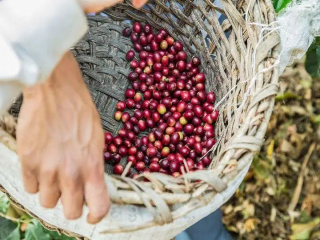
Coffee is constantly "Chinese", but it is missing its root and soul.
Although coffee and coffee cultivation technology have been introduced to Yunnan, China by French missionaries since 1904, coffee as a crop did not bring effective economic benefits to farmers at that time, and the taste of coffee was not in line with the taste of Chinese people. therefore, coffee has been in "water" in China for a long time.

What are the varieties of small-grain coffee beans? Yunnan small-grain coffee brand flavor taste Huaguoshan introduction
This species is the most widely cultivated species in the genus Coffea. Because of its strong cold resistance and short-term low temperature resistance, it can grow on a mountain at an altitude of 2100 meters in the tropics, but is not resistant to drought; the branches are fragile and not resistant to strong wind; the disease resistance is relatively weak; the fruit is easy to fall off after ripening; after processing, the coffee has a low flavor and caffeine content. 1, sexual reproduction is a performance to obtain a large number of seedlings.
Identification of genuine and fake coffee
Common adulterants in coffee are chicory root powder, roasted ground grains, etc., or processed with other bean-shaped seeds instead of coffee beans. The sensory coffee is brown and powdery. Due to the Maillard reaction during roasting, the coffee has a special aroma, and counterfeit coffee has no or
Zimbabwe AA Plus Estate Salim Coffee Beans Zimbabwe AA Plus Estate Salim
Zimbabwe beans baked raw beans, in the player circle belongs to East African beans, a must-try, beans beautiful appearance, sour sweet overall taste is very rich... This Salimba is produced in the important area of fine coffee in the country: Chipinga, belonging to the latest harvest of new arrivals, this batch of cups measured as follows: dry aroma: caramel, nut aroma, fat aroma, spice sweet, grass root aroma, cool aroma, ripe fruit aroma wet aroma: burnt

Liao Zinc, a post-90s girl, takes root in his hometown to make coffee for the citizens.
With dim lights, soft music and the fragrance of coffee in the air, Liao Zinc, a post-90s girl, returned to Wanzhou with her love of coffee and held a coffee sharing party for the citizens once a month. Yesterday, she said that she liked the comfortable life in her hometown and wanted more people from her hometown to understand the coffee culture. Liao Zinc, 23, who is worried about Wanzhou's hometown, is a native of Wanzhou.

Basic knowledge of distinguishing Fine Coffee from genuine Coffee
The coffee here refers to the brown powdered solid drink of raw coffee beans roasted and ground. Common adulterants in coffee are chicory root powder, roasted ground grains, etc., or processed with other bean-shaped seeds instead of coffee beans. The sensory coffee is brown and powdery. Due to the Maillard reaction during roasting, the coffee has a special aroma, and counterfeit coffee has no or

How about coffee in Yemen? where does mocha coffee come from? is there a root to be found?
Professional coffee knowledge exchange more coffee bean information please follow the coffee workshop (Wechat official account cafe_style) Front Street-Yemen mocha Coffee introduction Coffee was first discovered in Ethiopia, followed by Ethiopia's neighbor Yemen, with its unique microclimate and high altitude location to start producing coffee with unique flavor, Yemen is the first in the world to use coffee as a farmer

Identification skills of genuine and fake coffee basic knowledge of coffee beans
The coffee here refers to the brown powdered solid drink of raw coffee beans roasted and ground. Common adulterants in coffee are chicory root powder, roasted ground grains, etc., or processed with other bean-shaped seeds instead of coffee beans. The sensory coffee is brown and powdery. Due to the Maillard reaction during roasting, the coffee has a special aroma, and counterfeit coffee has no or
General knowledge of high-quality coffee to distinguish between true and fake coffee
The coffee here refers to the brown powdered solid drink of raw coffee beans roasted and ground. Common adulterants in coffee are chicory root powder, roasted ground grains, etc., or processed with other bean-shaped seeds instead of coffee beans. The sensory coffee is brown and powdery. Due to the Maillard reaction during roasting, the coffee has a special aroma, and counterfeit coffee has no or

How to tell if the coffee has gone bad?
Instant coffee identified as Rubiaceae shrub, coffee tree fruit seeds, semicircular grooves, stir-fried coffee powder, brown has a special aroma, coffee powder can be drunk after boiling, such as the juice will be concentrated and then dried into instant coffee. Fake coffee is mixed with chicory root powder in real coffee, or roasted and crushed grains and beans. Real coffee contains caffeine and has